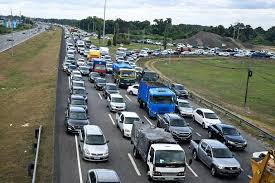
On Friday, the 17th of April, Kingston experienced rain. It wasn’t anything out of the ordinary; it seemed to be a simple shower lasting about 2 hours from 2 pm to 4 pm, yet this bit of rain it seemed brought the whole capital to a standstill. Cars in gridlock for hours, commuters unable to get home as vehicles were stuck in traffic.
In the same week, the transportation minister opined that the nation is going to be impacted by the ongoing war and warned that the government may have to restrict movement of people in an effort to save on fuel costs which have almost doubled and are expected to remain high for the foreseeable future.
The traffic snarl and the minister’s comments underline key issues affecting the countries transportation and show that not much long-term planning has gone into solving out traffic and transportation woes.
A lot of what we should have learned took place during the COVID-19 pandemic. Work from home was introduced by most bosses and if we are honest with ourselves, productivity did not falter. That should have sparked conversations among bosses about retaining it and looking at changing their managerial practices to incorporate this new edition. Unfortunately, this was not done and when the pandemic ended everyone went back to work in person.
This remains an option, one that would greatly reduce the number of cars on the road during peak hours thereby reducing traffic and the potential for congestion that we saw the other day. It remains the easiest option, but it is not implemented because most bosses and managers maintain a backwards form of management where if they don’t see you they don’t feel that you are working.
It’s no secret that one reason why our productivity is woeful is because the managers practice management styles which are long outdated, in many cases mimicking the bakra master on a plantation. This type of management rails against work from home because it stifles the manager’s ability to act as a despot and relies on trust in the fact that the worker is not only trained in the job, but will also work when no one is watching.
Our managers enjoy acting as depots and do not trust their subordinates, so it is in the government’s hands to legislate something like work from home in the same way they legislated for flexi-hours.
A long-term solution to our traffic woes, as well as decreasing our national fuel bill, is trains, trams and buses. With buses holding up to 45 people, this represents at least 30 cars off the road if we assume that the majority of potential passengers own cars. More buses mean less congestion and traffic snarls because again there are fewer cars on the road.
Trams would also work wonders, especially in Kingston, where we already had tram lines. The reintroduction of trams would save on energy by utilizing solar trams, which have been in operation in other countries, and reduce congestion as well as take the place of the route taxi, which drives with no care for others. The downtown to Papine route, which is basically a straight line, is perfect for trams, especially since trams ran that route many years ago, and most areas in the corporate area are suitable for tram lines. Now, it would take a plan and cannot be done haphazardly.
Restriction on importing cars is also a way, albeit a more medium to long term way, of solving the countries congestion issues but if we are honest again, we know nothing will come of that. With banks making a killing through car loans and cars representing the achievable goal of a people priced out of homes it is highly unlikely that this would happen.
But if it did happen, if restrictions were to take place, it could be something like Singapore, which heavily restricts car ownership and promotes mass transit. Restrictions along the lines of one car per household or at the source restricting the number imported would also, in time, reduce the number of cars on the road but you do not have to be Nostradamus to see potential problems in the future if we decide to go that route.
Finally, the government could instruct agencies to do what people have been calling for, over decades and mandate that the agencies doing work on the roads work at night so as not to impede traffic during the daylight and peak hours. This has been suggested for years and would work wonders in places like Kingston and Montego Bay where the roads are always busy during peak hours and other daylight hours.
This would need the government to implement flexi-hours, something they have stated they are committed to for the Public sector. It would allow for traffic to run smoothly during the day when people are going to and from work and would allow workmen to work without interruption from honking cars and cantankerous road users.
There are many options that we could use to reduce the traffic and frequency of traffic jams we face in the country. It is something that must be done. It eats away at productivity as the PM has rightly stated and that is productivity that we desperately need.