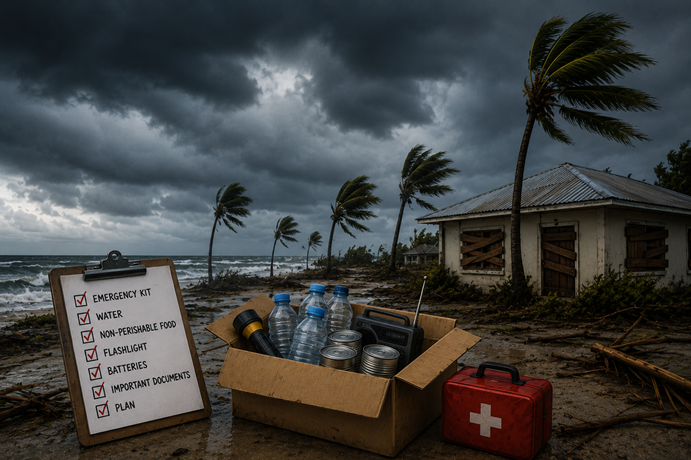
We are two weeks away from the beginning of the Atlantic Hurricane season, and the country remains woefully underprepared. Despite being hit by two major storms in two years (Melissa and Beryl), things which should have become routine are yet to be implemented. Take, for example, gully cleaning; this should be an ongoing event, happening, say, every quarter, with a ramping up of efforts during the hurricane season. Instead, it is done on an ad hoc basis, implemented in the middle of the season and ramped up when we are about to be hit.
That makes little practical sense as the amount you have to clear in that short space of time becomes impossible. The distribution of hurricane straps is also something that can and should be done on an annual basis to ensure that those who have not already installed them have the opportunity to do so at a subsidized rate, so that their roofs do not get blown away.
The upcoming hurricane season is going to be more savage than the last, which was worse than the one before it. We are living in a time, due to global warming, that will see us experiencing more intense storms. This is something acknowledged by politicians, but we are still acting like we are in the 1980s.
The country remains unprepared, and we know this because the damaged houses still haven’t been fixed, people have only recently left shelters, and communities and towns which were once thriving are still shells of their former selves.
Nobody is expecting Black River and areas of Westmoreland to be back to normal after 6 months; that’s impossible, but we do expect emergency housing to arrive at an impressive scale before the 5-month mark. It is only weeks before the beginning of the hurricane season that we can announce that we have imported 900 homes; obviously, the rate of acquisition is not matching the scale of the emergency.
The damage done to the western end of the island was unimaginable, but, and we all think it, had it been the corporate area that was hit, the country would be crippled, and the death toll would be far greater. We still have not dealt with people who live on the gully banks and in shanty towns, people who are landless, so they resort to occupying land no one wants or can use or shouldn’t use. The corporate area remains a land of squatters in marginal land, and all it takes is one good storm in the shape of Melissa or even Beryl to see hundreds killed and the economy brought to its knees as the capital takes a hit.
Instead of utilising this as an opportunity to right the wrongs of landlessness, we have moved full steam ahead, embracing the same principles that have left over half the population as landless. A holistic approach is needed to make the country resilient against future catastrophes, but instead, what we have gotten is a piecemeal approach.
Yes, a national reconstruction agency sounds nice, but if the already existing agencies are already failing to do the job, how can we expect anything new to do better? If we are not addressing low-hanging fruit, such as moving people out of dry riverbeds, how are we going to do the hard task of building climate-resilient cities?
Melissa was a catastrophe, but also an opportunity to do things right. We have dropped the ball big time. Focus remains on NARRA, but little attention has been paid to ensuring that communities in the here and now are resilient as we come into a new hurricane season. We do not have time now. We will be releasing the projected number of storms and hurricanes shortly. All we can do now is prepare in what little way we can and plan for the future.