Ever since I wrote my last oped calling for stronger Caribbean inter-regional cooperation, in the face of increasing threats from outside forces towards the wellbeing of our peoples, I wondered how many of my readers believed my desire was nothing more than quixotic? How many of them, who were more informed with respect to the history and to the dynamics of politics than I am – with an enviable command of all kinds of data – merely smiled, condescendingly and dismissively, at everything that I said? How many of them, if they could, were ready to commit me to a nursing home or an insane asylum?
Were there readers who had sought to skeptically assess and then to cynically discredit all that I had said because our peoples and their leaders are too narrowly parochial in vision and too selfish in their aspirations to achieve such a thing? Again, are we so bereft of such a communal spirit that we lack the power of the cosmos which the European nations evoked when they came together to form the European Union (EU) – with its 27 member states – finding its genesis in the Treaty of Paris in 1952, evolving through the Treaty of Rome in 1958, the Single European Act of 1987, the Treaty of Maastricht in 1993, then culminating in the Treaty of Lisbon in 2009?
And then what, pray tell, my friends of the African Union (AU), the 55-member continental body launched in Durban, South Africa, on July 9, 2002, replacing the Organization of African Unity (OAU, 1963–2002)? The Africans were also inspired, again, perhaps by another spirit of the cosmos to see the value of such inter-regional cooperation and solidarity amidst the tumults of our changing times. Perhaps no other group of peoples in the world truly appreciate such communality as those living on the African continent which has been pillaged by the marauding forces of European imperialism and colonialism. But, are we here in the Caribbean – largely the bones of their bones and the flesh of their flesh – wholly incapable of achieving the same thing? Are we so embalmed with selfishness and so entombed by inferiority that we are beyond the power of God to add the sinew of life to our cultural and our political remains? I think not.
Perhaps I am not so much like the mythical Don Quixote, or like some poor, mad and indigent person on the street, but more like a juju man of sorts, with me trying to evoke within us a greater and more urgent sense of Caribbean regionalism than ever before. It has been said that a “juju man” is a traditional West African spiritual practitioner, healer, or witch doctor who creates charms and spells, known as juju, which can be used for both positive and negative purposes. These practitioners are well-versed in traditional medicines and, while often associated with traditional religion, they are also hired to ensure compliance or to enforce contracts. And, in as much as I would love, in this instance, to create charms and spells towards conjuring up a spirit of regional integration, I declare that such a spirit is already here. It did not, as some might have supposed, depart the region when West Indies Federation died, it lingered. And the evidence of its continued existence is palpable.
The Honorable Marcus Garvey, after having called for Caribbean and global Black unity, began with the founding of the Universal Negro Improvement Association (UNIA) in Jamaica on July 20, 1914. He advocated for unity among people of African descent across the Caribbean, Africa, and the Americas to combat colonial exploitation. If there was ever a juju man who had sought to evoke a spirit of unity in the region it was none other than Ole Marcus. West Indies Federation came and then it went, afterwards, like a premature child, born before its time, ejected from its mother’s womb, due to the pangs of aborted labor. Then came the Caribbean Free Trade Association (CARIFTA) in 1968, before it gave way in 1973 to the Caribbean Community (CARICOM). The regional CARIFTA Athletic Games are still with us, founded in 1972. It is an annual under 17 and under 20 athletic competition, an event, historically dominated by Jamaica. The spirit of Caribbean regionalism lingers – it lingers.
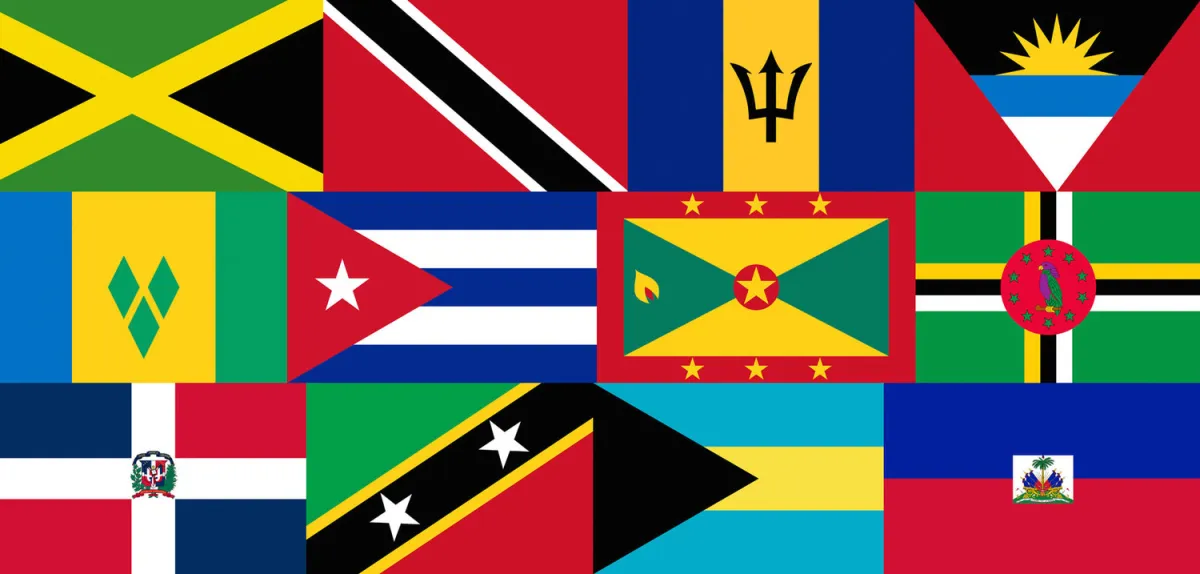
Several decades before the CARIFTA Games, in the 1920s, long before Caribbean nations won their independence from Great Britain, the West Indies Cricket Board of Control (WICB), now Cricket West Indies (CWI), the governing body for professional and amateur cricket in the Caribbean, was founded. Headquartered in St. John’s, Antigua and Barbuda, it manages the West Indies cricket team, Test tours, and regional tournaments, representing 16 English-speaking Caribbean countries. It consists of six territorial boards which are Barbados, Guyana, Jamaica, Leeward Islands, Trinidad and Tobago, and Windward Islands cricket boards. CWI is funded partly by ICC distributions, which are essential for its financial stability. The board is currently aiming to strengthen regional cricket development through grassroots programs. Culturally, the building blocks are there for a Caribbean United States. The spirit of Caribbean regionalism lingers – it lingers.
Before I mention other institutions which reflect the spirit of Caribbean regionalism, I would be remiss by not mentioning yet another juju man in that regard, none other than the late Professor The Honorable Ralston “Rex” Nettleford, OM. He was a political Scientist who was the first alumnus of the UWI to become vice chancellor. He was the epitome of a true statesman and he shaped the cultural and intellectual landscape of Jamaica as well as the wider Caribbean as a writer, a dancer and as a trade unionist. In his work, he sought to emphasize the importance of cultural identity and he did much to persuade the Caribbean of the central place that culture ought to take. His efforts to shape postcolonial culture is his involvement with trade unionism. He forwarded the growth of trade unionism in the Caribbean region. Through his instrumentality the trade union institute was conceptualized and later became a model institute for the Caribbean and, indeed, the rest of the world.
Oriens Ex Occidente Lux is a motto rendered in Latin, which means, in the English language: ““A Light Rising From The West”. It has served as the guiding principles, ideals, and beliefs for 78 years for the University of the West Indies, an autonomous, public, regional institution which was established in 1948. That august citadel of learning serves the higher education needs of the residents of 18 English speaking countries and territories in the Caribbean across 5 campuses. It has a staff compliment of about 1,200 and a student population of about 50,000. In addition to Professor Nettleford, it boasts such alumni as Sir Derek Alton Walcott – a Saint Lucian poet and playwright; Patrick Augustus Mervyn Manning – a Trinidadian politician who served as the fourth prime minister of Trinidad and Tobago twice from 1991 to 1995, and again from 2001 to 2010; Owen Seymour Arthur PC – a Barbadian politician who served as the fifth prime minister of Barbados from 6 September 1994 to 15 January 2008; Philip Joseph Pierre – a Saint Lucian politician currently serving as the prime minister of Saint Lucia since 2021; Dame Calliopa Pearlette Louisy – a Saint Lucian academic, who served as governor-general of Saint Lucia from 19 September 1997, until her resignation on 31 December 2017; Kwame Senu Neville Dawes – a Ghanaian poet, academic, critic, actor, and musician; and Sir Lloyd Erskine Sandiford – a Barbadian politician who served as the fourth prime minister of Barbados from 1987 to 1994, just to name a few.
The Caribbean Examinations Council (CXC) is an examination board. It was established in 1972 under agreement by the participating governments to conduct such examinations as it thinks appropriate and award certificates and diplomas. It regulates the conduct of examinations and prescribes the qualification requirements of candidates and the fees payable by them. It provides certifications in 16 English-speaking Caribbean countries and territories and has replaced the General Certificate of Education (GCE) examinations used by England and by some other members of the Commonwealth. Good duppy still deh yah!
The Caribbean Maritime University (CMU) graduates are highly employable professionals, with 45% employed before graduation and a high overall employment rate, particularly within Jamaica and the wider Caribbean. Graduates specialize in fields like marine engineering, logistics, and security, with many securing roles in industry, manufacturing, and technology.
Students primarily come from across the Caribbean region, with a significant base from Jamaica. As a premier, internationally approved institution, it attracts a diverse student body, often drawing individuals from various Caribbean nations seeking specialized maritime, logistics, and engineering training. Good duppy still deh yah!
The Caribbean Court of Justice(CCJ or CCtJ) is the judicial institution of the Caribbean Community (CARICOM), which was stablished in 2005. It is based in Port of Spain, Trinidad and Tobago. It has appellate jurisdiction for Barbados, Belize, Dominica, Guyana, and Saint Lucia. In its original jurisdiction, the court interprets and applies the Revised Treaty of Chaguaramas which established the Caribbean Community, and is an international court with compulsory and exclusive jurisdiction in respect of the interpretation of the treaty. In its appellate jurisdiction the court hears appeals as the court of last resort in both civil and criminal matters from those member states which have ceased to allow appeals to the Judicial Committee of the Privy Council (JCPC). And, finally, what of the Caribbean Development Bank, a regional financial institution, which was established by an Agreement signed on October 18, 1969, in Kingston, Jamaica, and entered into force on January 26, 1970? The (CDB) has 28 members: 19 regional borrowing members (mainly Caribbean nations), 4 regional non-borrowing members (which are Brazil, Colombia, Mexico and Venezuela), and 5 non-regional non-borrowing members (which are Canada, China, Germany, Italy, and the UK). The bank focuses on economic development, offering loans and grants for projects to its regional borrowing members. The spirit of Caribbean regionalism lingers – it lingers.
Finally, the quest for reparations from our former colonial masters continues in earnest. And even in this noble endeavor the spirit of regionalism can be found. There is strength in numbers, as they say, and our appeal for what is rightfully ours and for that which is long overdue, with respect to justice for indigenous genocide and chattel slavery, is better heard in thunderous chorus than in a lone halting voice crying in the wilderness. To that end the Caribbean Reparation Commission was established in 2013, under the auspices of CARICOM. It is chaired by the venerable Professor Sir Hilary Beckles of Barbados. The preponderance of evidence suggests that the yearning for greater Caribbean integration burns deeply within the bosoms of many. And, if I am seen now more as a juju man than as one who needs to be placed in a straightjacket, then let me close this oped with lyrics which were made famous by the late Jimmy Cliff:
“Bongo man has come…..
The bongo man has come…..
I’ve given you the warning,
Long before the dawning.
I hope you are prepared,
The bongo man is here.