“In questions of power, let no more be said of confidence in man, but bind him down from mischief by the chains of the Constitution.”
- Thomas Jefferson
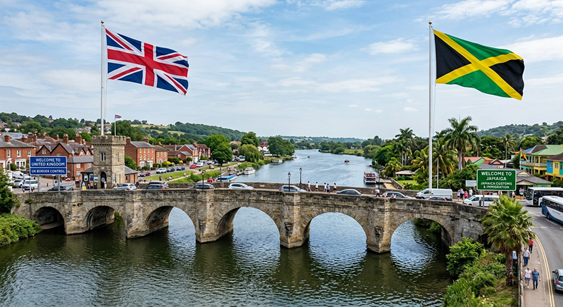
Jamaica became an independent nation among nations on August 6, 1962. This August, 2026, marked the sixty fourth year of its existence. I was born a few years before the Union Jack of the British Empire was lowered just moments before the Black, Green and Gold of the Jamaican flag was hoisted aloft after midnight, thus marking the wee hours of Independence Day. Much has happened since that momentous and seminal occasion. I have, like so many Jamaicans, enjoyed many rights and freedoms and have taken them for granted.
Still, there have been others who came to know of such rights and freedoms through the refractive lenses of abstraction, only after having endured repeated acts of violence and intimidation, with little or no redress in sight, or after having run afoul of the law, upon their arrest by law enforcement, and through legal counsel provided by their attorneys before and during court proceedings. And although many in society came to the knowledge of their rights and freedoms from vastly different experiences, they, often, never saw the cover nor have they ever turned the pages of a copy of the Jamaica Constitution.
My assumption, as a matter of course, is anecdotal, with me not being privy to any social science research that might have been done to ascertain the level of exposure of the Jamaican populace to the document upon which hangs all the institutions, all of the policies, and all of the practices of government. Do we really know of the overarching principle of the supreme law of the land from which every other law gains its power and manifests itself? I was sent to school by my parents not just in preparation to become independent and to gain meaningful employment, but, as my late mother would say to my brother and I, “to become honest, decent, Christian citizens.” I had some civics lessens, which now, after so many years, I can vaguely recall. I learned European and West Indian history, but nothing of the document which made me Jamaican as much as the culture which shaped me which began three hundred years before.
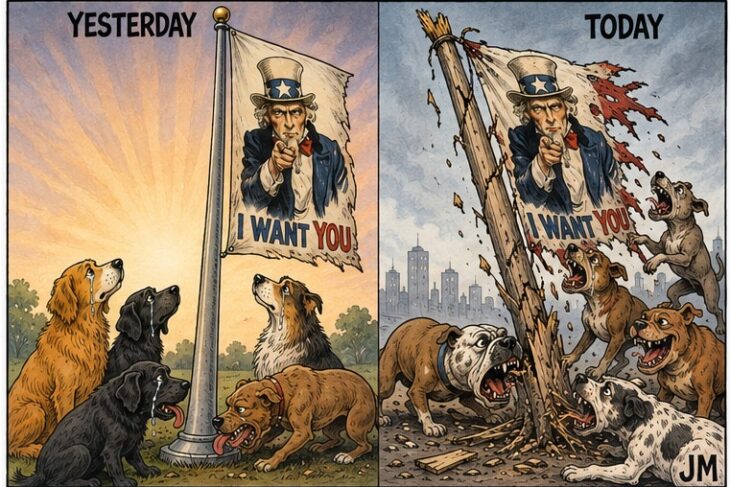
Having sought to understand the people of my adoptive home here in the United States of America, through readings of their history, of their politics, of their economics, of their variegated culture and of their Constitution, and of what scholars had written about them, I began to become discouraged with all of them in recent times. Many Americans, for all their talk of law and order, do not seem to take their Constitution seriously. To make that observation of the American electorate in that regard is one thing, but to witness the gross dereliction of duty among congressional representatives, to witness the wanton mishandling of the document by the Supreme Court, and to witness the total disregard shown to it by the administration I suspended my studies indefinitely. “Let me”, I thought, “embark on studies elsewhere where people take their laws, and the interpretation and the application of their laws seriously.” It was then that I realized that I knew more about the U.S. Constitution and nothing of the one from “weh mi born an grow”. And so, I purchased a copy and read it in earnest.
Despite the legalese and the repetitive nature of the legalese it was quite a rewarding experience. In the twilight of my years I have come to appreciate what would have or what could have proven to be so very useful during my formative years on into my adult life. And, for me, the reading of the document is not purely an academic exercise – having come to see what can occur if one is wholly ignorant of it, not only in respect to my own individual rights and freedoms, but also in terms of the very survival of democracy and of the country. The mayhem in the United States and the disregard for its laws has helped me to appreciate legal sanity elsewhere and, believe it or not, I believe that Jamaica, from what I have experienced and from what I have read, as imperfect as it is, can remind or can teach Americans a thing or two about what it is to respect their Constitution – if, by no other means but through the Jamaican courts.
I believe that the Jamaica Constitution should form the bedrock of civics lessons in school, assuming that it is not now a part of the curriculum. It should not be restricted to the purview of law professors, judges, attorneys and law enforcement personnel. As the great Christian Protestant Reformers and Bible translators, like Martin Luther, John Calvin and William Tyndale, saw the value of breaking the scriptures from the esoterica of Latin to the vernacular of the people, this ought to be our quest with respect to the Jamaica Constitution in order to promote, to safeguard and to strengthen our democracy and our various political processes. I have read material of how the inadequacy of civics lessons in American schools is a contributing factor to political ignorance and apathy in the democratic process. There have been clarion calls for a strengthening in this area, not only by educators, but by legal minds and by social commentators.
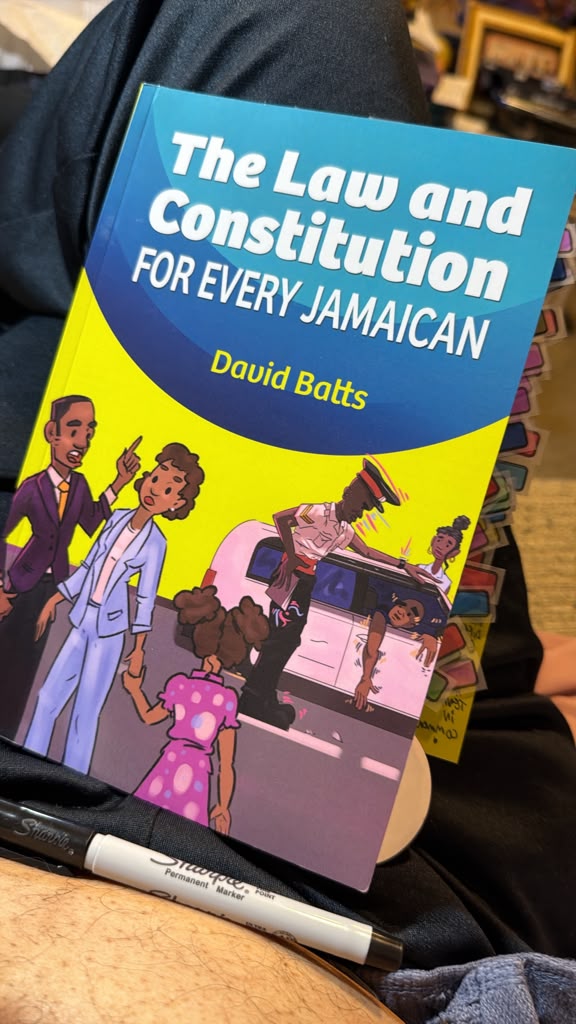
The Jamaica Constitution, in its purest form, is not for the faint of heart, but such a publication as, The Law and Constitution For Every Jamaican, by the Honourable Mr. Justice David Batts, is something to seriously consider. It is a good digest of the document which is couched in deep historical context. Whatever was blind to me during my first reading of the document, with all of its legalese, his book helped to fill in the blanks. There is another book that I have seen on-line, but which I have not read, titled, Aspects of Jamaican Constitutional History, by David P. Rowe, et al. The Jamaica Constitution can be purchased on Amazon for $7.99 USD. With all this talk about severing ties with the British Monarchy and of constitutional reform do we know what the proponents and the opponents of such things are talking about? What does such a proposal add to or take away from us? Do you really know your rights and your freedoms? I thought I did, until I read the document for myself recently. And, when you peruse its pages do not keep it to yourself. Every informed citizen is a strong building block in this glorious edifice that we call democracy.