“I pledge allegiance to the Flag of the United States of America, and to the Republic for which it stands, one Nation under God, indivisible, with liberty and justice for all.”
- The American Pledge of Allegiance
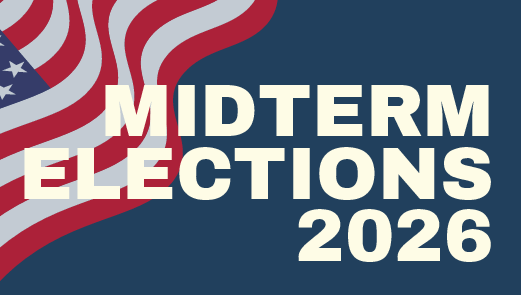
Election Day came and it went here in the United States of America, on Tuesday, November 3, 2026. It was not a presidential election, but what was referred to, traditionally, as mid-term elections when, at the federal level, some senators, in the upper house, came up for re-election and when all the congressional representatives in the lower house were made to brave the ballots of “we the people”. During the mid-terms there are also gubernatorial elections within the various states, and when decisions are made by the electorates in respect to who will represent them in the different political state houses. Mayors, county and city commissioners, judges and police chiefs seeking office or to retain office are decided on by “we the people”. Often, state, county and municipal constitutional amendments are placed on ballots in referendums. In short, the mid-terms manifest the vibrancy and the efficacy of liberal democracy at work in our society. But as is always the case, those who participate do not always get everything that they want – sometimes nothing at all. But that is part and parcel of our social contract – that which we signed on for. I did not get everything that I wanted in the mid-terms, but, I did receive something which provided hope in respect to what we all needed – a country governed by the principles of the Constitution.
Those I wanted to get into public office but who had failed to do so, and all the policy hopes that I had harbored but which were painfully dashed are unimportant at this juncture in American history – especially when they are juxtaposed against the freedom that I still have, one which was and still is gravely threatened, to, simply, cast my vote. All which I was denied and all the deep disappointments which came with them, which I must now endure, were nothing compared to that of being able to, simply, express my opinions without fear of any form of retribution and violence. During the mid-terms, the infrastructure which had been put in place by the nation’s founders for endless debate, for heated disagreements, and for hard fought agreements with their attendant sage resolutions held ground and were not summarily dismantled by malevolent forces which are eager to see the demise of our democracy. The results of those elections told me, unambiguously and unequivocally, that we still have a country. It might be on life support, but it is still showing vital signs. What hope could there be, for any sort of future, positive change, and for all “we the people”, if we no longer had a country with a machinery of governance guided by a moral compass which reflects the tenets of the Constitution?
Over eight years ago I was instructed by someone, a person in the know, to “Pray for the foundations of this country”. The person, who was well aware that I was about to pray then towards political outcomes at the beginning of that political electoral cycle, which were of a partisan nature, stopped me in my tracks. The person told me that the impending crisis was deeper than mere partisan politics. Like a revolving door, one political party goes in, and one goes out and vice versa. The issue was much deeper I was told. I did not understand at the time the implications surrounding the request that was being made of me, but with the passage of time it became clear as to what was involved. Increasingly I would hear people in the media begin to express concerns about the foundations of the country. What the person had said to me presciently, in my own home over eight years ago, proved to be quite right and painfully so. Soon, both Republicans and Democrats joined forces in sounding the alarm, which was, for me, an unusual and a highly patriotic sight to behold. The existential threat, according to them, was greater than their partisan concerns. What was under attack was the Constitution.
What transpired after the midterms is something that will be talked about for many years to come. There were a few historic firsts, like that of the gubernatorial race in the State of Georgia, when a descendant of African American slaves was given the reins of power by “we the people”. She, a Democrat, is also the first person of her gender who was elected to that position. In the State of Florida where I reside, the governor-elect, a Republican, will also be the first person of color to be elevated to that high office by “we the people”. In the State of Wisconsin another person of color, a Democrat, is also to become its first ever Black governor elected by “we the people.” And, a senator-elect, out of the State of Michigan, is to become the first Muslim-American to enter the upper house who was chosen by “we the people”. Elections do not solve problems, but they do provide opportunities to solve them. Those and other individuals like them have been given permission to try and fulfill their campaign promises towards those ends. And despite those notable historic firsts, I have chosen not to mention their names in this opinion piece, or to say who I did and did not support, because the real stars in all of this are the Constitution of the United States and “we the people” who came out to fiercely protect and to stoutly defend everything which that hallowed document stands for.
I now bring this essay to a close with an account from American history. On September 17, 1787, at the conclusion of the Constitutional Convention in Philadelphia, as the venerable Benjamin Franklin emerged from the proceedings (recorded in the journal of delegate James McHenry and other accounts), he was asked by Philadelphia socialite, Elizabeth Willing Powel, whether the delegates had created a republic or a monarchy. Mr. Franklin then offered the following reply, “A republic, if you can keep it”. That is still, very much a concern for us today as it was for the nation’s founders so long ago. Can we, here in 21st century America, keep our republic? That is left to be seen, that is left to be seen.