Thousands of years ago, Rome was at war with Lusitania. The battles were long and hard, and at times it was questioned whether Rome, this mighty behemoth, could defeat the Lusitanians led by Viriathus.
In the year 139 BC, three Lusitanians who had been sent as emissaries to the Roman legions were bribed by Rome and the three — Audax, Ditalcus and Minurus — murdered Viriathus in his sleep. When they returned to the Roman camp to get their loot, Quintus Servilius Caepio kicked them out without paying them, stating that “Rome does not pay traitors”.
Foreign policy for a small country most of the time is about give and take, with the small country taking a little and giving a lot. This is the curse of being a small nation: one, most of the time, must go along to get along. It is why, upon independence, we retained the monarch as our head of state and remain in the Commonwealth; it was easier to go along with those suggestions to get what we wanted, which was full independence.
However, there are times when going along to get along simply cannot be done, such as when we are faced with abhorrent choices or to turn a blind eye to evil. This second track was what we followed when Norman Manley as chief minister condemned apartheid and why Hugh Shearer, in his role as minister for independent Jamaica, also condemned it.
It is easy to forget now how weak the anti-apartheid movement was, how the major countries such as the US, UK, and Canada supported the apartheid regime openly and how much of a risk it was for a newly independent small nation to take a strong moral stand against it. Despite it all, we were vocal in our condemnation across administrations, and upon his release, Anti-apartheid activist Nelson Mandela visited Jamaica and hailed us for being on the right side of history.
Jamaica again made the tough but correct decision when in the 70s the US placed serious pressure on us to ensure that Cuban troops who were headed to Angola to fight in support of the MPLA could not transit through Jamaica. Secretary of State and National Security Advisor Henry Kissinger came to Jamaica in person to show how serious the US was. Prime Minister Michael Manley disregarded the very serious threats uttered by the US and allowed Cuban troops to transit. Cuban troops, along with the MPLA, defeated the apartheid regime’s forces, ensuring that the racist regime did not have a foothold in Angola and ensuring Angolan independence.
Manley was not unaware of the threats, especially the economic threats, as Jamaica was going through an economic shock and would naturally rely on US assistance to see us through the rough patch. Financial assistance, however, was deemed to be small potatoes when compared to having a foreign policy built on principle and independence. It was felt, correctly, that some things require a stance to be taken and let the chips fall where they may, some things we believed were obvious moral choices, whatever the consequences.
Let us remember that this stance was taken in the face of the threats of economic shock and an increase in political subterfuge to remove Manley. Let us remember that the pressure threatened against Jamaica, such as that meted out against Chile, was deemed to be insignificant in the face of standing up for what is morally correct.
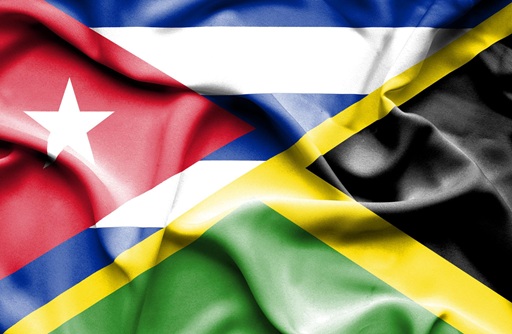
Cuba is our closest neighbour and for the last 50 years has been the clearest example of a friend. A friend in this instance is one who renders assistance to others without expecting something in return. For over 50 years Jamaica has welcomed Cuban doctors, nurses, and teachers to our shores to man our underserved systems. Cuba, for the last 50 years, has also taken our medical and engineering students, provided them with full scholarships to study in Cuba.
Cuba has also left a legacy in this country by building schools such as Jose Marti or Anchovy High, as well as providing us with the best sports college in the English-speaking Caribbean in the form of GC Foster college.
The historical background is necessary because I feel many of us have either forgotten much of the history, are unaware of it, or feel that it was not that big a deal. Jamaica’s foreign policy stances are big deals and are treated as such by other nations who view us as a principled country willing to make tough decisions to be right historically.
That is why it was shocking when Jamaica buckled last year when it cancelled the medical programme we have in conjunction with Cuba. Excuses were raised such as the contracts not being valid here even though, earlier we vocally stated that there were no issues with human trafficking. We were told that the Cuban state takes part of the money earned by the doctors and nurses and it was an issue, despite the fact that these contracts are old and have been vetted by both governments.
To this day it remains unclear why we cancelled the programme and sought to renegotiate with individual doctors and nurses, but there remains a strong suspicion that the Government was pressured into cancelling the deal by the US as they seek to further isolate Cuba in their push for regime change.
Suspicions that Jamaica was facing serious pressure from the US to abandon Cuba were heightened recently as Jamaica abstained in a UN vote which condemned the illegal US blockade on Cuba despite coming out against it in Parliament a day before.
The Government has said that it abstained not because of any pressure but because it feels it is useless to constantly vote on something which is never implemented. The excuse makes no sense on the face of it and is absurd when thought of for just a minute. Should Christians stop praying for peace on Earth because it has not been achieved? Should we stop the research on AIDS and cancer because, heck, after decades, we have no cure? Or should Jamaica and other countries have done nothing regarding apartheid because UN Security Council members were in favour of it and sponsored it?
At what point do we acknowledge that just because something is not done today does not mean we should give up on achieving it? With that logic, we would still be in chains because there has never been a successful slave rebellion in the English-speaking Caribbean, so our forefathers should have just shrugged their shoulders and got on with their jobs.
Antigua and Barbuda have broken ranks and at least have been honest about the pressures they were under to not vote in favour of the resolution. Are we really being asked to believe that only Antigua was read the riot act?
It is something we can only expect partisan hacks and those with no knowledge of the situation to believe.
The Government insists that there was no pressure and while I have suspicions, I cannot prove otherwise. If that is the case, then the abstention is even worse because we claim that no pressure was put on us. It means we abandoned Cuba for literally nothing. How many of us are willing to believe that I wonder?
With the recent election in the US that resulted in the Democrats gaining the majority in both Houses and with nothing to show for selling out Cuba, this may very well be a case where we betray our friends and get nothing in return. This is a deal that even Judas would be embarrassed to take.
We find ourselves potentially discovering what the 3 Lusitanians found out: the empire does not pay traitors. The empire has no time for those who betray. It will use you, then toss you aside like a used handkerchief. It seems to be something every generation must learn and it seems that the Government will learn that lesson as whatever promises were made by the Trump Administration fade into the background as his political opponents are in the ascendancy.
For all his talk of pragmatism in foreign policy, Andrew Holness has shown himself to be a more polished version of Kamla Persad-Bissessar in Trinidad and Tobago. While she is open and blatant in her sucking up to the US and following all its dictates, Andrew attempts to sound good to everyone even while implementing the US agenda.
Yes, foreign policy is give and take, especially for small states, but the rule of law amongst states trumps even that. We as a small nation cannot afford to live in a world where might makes right; we cannot afford to live in a world where the strong do as they will, and the weak suffer what they must. It means being bold, taking tough decisions and owning them. We have abandoned our friend, the least we can do is own up to it, be honest with the people and let them know why we did what we did. If not, then we have abandoned our patrimony for nothing.