There was a time when corporal punishment was part and parcel of our Jamaican school system. It was, perhaps, a holdover from the old British colonial era. It was often abused and was discontinued sometime during my tenure in the school system when I was on the teaching staff at my alma mater, a prominent high school in the Corporate Area.
I cannot speak for student life after corporal punishment was abolished, but I am confident that many of my readers who went through the school system can recount incidents of abuse. Inasmuch as I had fond memories of school, both at the primary and at the secondary levels, it was a place of dread for me most times.
School life is well known for developing esprit de corps or comradery among students, not just through classroom instruction but through extracurricular activities which, to be honest, were quite positive and enriching in many respects. But, in a more negative sense, school life also helped students to bond together through their anger and their resentment towards what they perceived as unjust rules, unjust practices, and unjust teachers and administrators — even to the point of defiance.
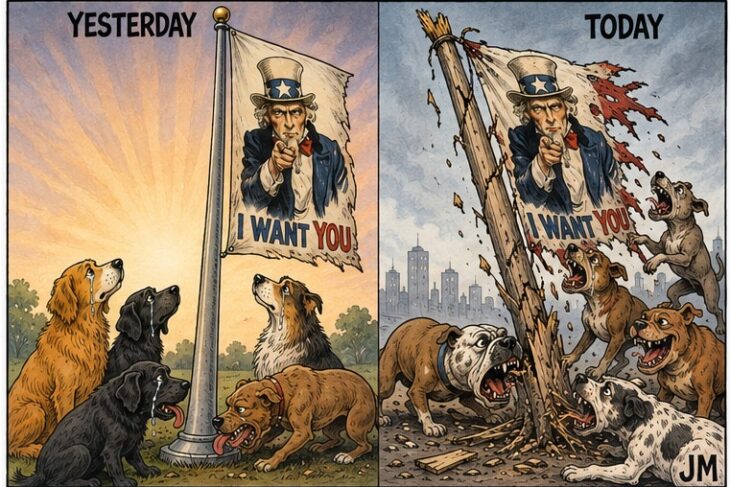
We learned the value of community, which included looking out for and protecting each other against anyone outside of our orbit who could be described, metaphorically, as “them”. Standing up for oneself was neither a safe nor a viable option. And it is a lesson which has carried over into my later years, especially now as we in the Caribbean region are experiencing or witnessing it through the bullying of our countries by the United States of America. The so-called Monroe Doctrine, therefore, be damned. We are nobody’s “backyard”. We are a region made up of sovereign states — as small and as poor as we are.
Articulated by President James Monroe in 1823, the Monroe Doctrine established U.S. foreign policy which opposed European colonialism and interference in the Western Hemisphere. It proclaimed the Americas as being off-limits for further colonization, and it aimed to protect the new Latin American nations. It also affirmed a U.S. sphere of influence in the region. As paternalistically arrogant as that policy was, if protecting such nations, as it so stated, was well intentioned, then one could understand. But, if U.S. foreign policy, as we are now experiencing it in the region, is symptomatic of what was really intended then, again, the Monroe Doctrine be damned. Might does not make right.
Do not get me wrong, we should always stand up for what is right against that which is patently wrong and applaud the use of might, where appropriate, when it is used to achieve right. So, if the United States, for example, or any other “super power” is right and acts upon certain issues accordingly, especially within the context of adherence to international laws and in regards to the enforcement of international treaties — then so be it. We ought to support what is in the best interest of all. But, let us never confuse the noble notions of “truth and justice” with that of the ignoble ones of “might is right”. Let us never confuse noble moral convictions, especially with regard to the values of liberal democracy, of laissez faire economics, and of international free trade with that of the ignoble ones of “might is right”.
And so, what has transpired in the sovereign nation of Venezuela, recently, and with the wanton destruction of small, unarmed seagoing vessels in Caribbean waters, with the attendant wholesale murders of those who occupied and operated them, rings alarm bells, and quite loudly. The oil embargo against the sovereign country of Cuba, and the demand that we expel Cuban nationals along with other nationals from our shores, people who come from countries which do not see eye-to-eye with the United States, are other cases in point. We are not children, no we are not, and might is not right.
I am neither a Socialist nor a Communist. And although I see some value in people being free to make a buck, I am well aware of the deficiencies in and of the atrocities committed by Capitalism around the world, even within liberal democracies. That being said, I still have negative flashbacks of the Cuban regime, under Dr. Fidel Castro, in respect to its interference in our local Jamaican politics, with the permission of our Government under the leadership of the late Mr. Michael Manley. Jamaica became a war zone, resulting in the deaths of so many Jamaicans, which was facilitated in part by the late Mr. Edward Seaga, the opposition leader.
Rumors abounded about the presence of the American C.I.A., of the Russian K.G.B., and of the Cuban D.G.I. on the island. And although I was a young and naive high school student at the time, I could not see pass my anger towards all politicians in order to appreciate the political vision of Mr. Manley when he tried to steer the country down the path of the Non-Aligned Movement.
All nations, even the small ones, have a right to chart their own destinies. All nations, whether the Third World or the First World ones, have a right to deal with whoever they please. But, perhaps, Mr. Manley had underestimated the politics of “might is right” which was exercised by the “super powers”, especially by the United States, against his Democratic-Socialist regime.
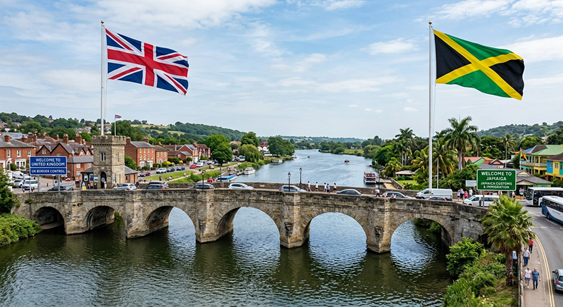
We in the Caribbean were nobody’s “backyard” and we were not the pawns nor were we the proxies of any of the “super powers”. But, since Mr. Manley’s tenure, and that of his late father before him, Premier Norman Manley, who was a champion of the West Indies Federation, after Jamaican independence in 1962 from Britain, the latter seeing the need for stronger Caribbean regional integration, we now need that sort of unity and even something stronger than what we now have within CARICOM.
The Caribbean Community consists of 15 full member states and 5 associate member states. It was established in 1973 in order to promote economic integration, functional cooperation, and foreign policy coordination among, mostly, the island nations in the Caribbean. The bloc primarily includes English-speaking nations, plus Haiti and Suriname — focusing on regional trade, disaster management, and security. But it seems that, politically and otherwise, CARICOM was not in a position to discourage nor to prevent the political maneuverings and the military actions of the United States, under its current Administration, in the Caribbean.
Several former Caribbean leaders filed a formal written protest, but to no avail. Even attempts which were made by the previous U.S. Administration to ram its vision of gay rights down the throats of Jamaicans, a people with a long religious tradition against such a lifestyle, were met with opprobrium. What was the reason behind such intimidation? Nothing else but the American unwritten foreign policy of “might is right”.
“Unite or Die” was a famous political cartoon published by the American patriot Mr. Benjamin Franklin in the year 1754, and it is often considered the first in American history. Featuring a snake which was cut into segments, representing the American colonies, it urged colonial unity against French expansionism, and it later became a key rallying cry for American independence against the might of the British Empire. Mr. Franklin, it appears, realized that “one hand can’t clap”, and that it takes all the fingers on a hand to firmly grasp any opportunities which were needed to ward off all external existential threats that were levelled against his people.
The late Emperor of Ethiopia, His Royal Highness Haile Selassie, saw the rationale behind such integration of nation-states. His helping to establish the African Union (AU) came out of his Pan-Africanist ideas due to his having experienced the invasion of his country by Mussolini’s fascist Italy, which, unsuccessfully, tried to annex and to colonize his country, and out of his having knowledge of the proclivity of European imperialist powers to use the philosophy of “might is right” in order to occupy, use, and abuse the people and resources of the continent, and, consequently, “under-develop” Africa, to use the words of the late Guyanese scholar and political activist, Dr. Walter Rodney.
I am naive about many things in this life, and I am also ignorant of many of the inner workings of government. But I am not so slow, nor am I so low in my IQ that I cannot understand and appreciate the gargantuan task of trying to unite peoples of diverse cultural, ethnic and political experiences, although they share a common colonial past which goes back several centuries. It is difficult to be a leader in one’s own country, with its different political agendas and factions always in play, to convince his or her own people, much more the leaders and the peoples of sister nations, of the immense value of regional integration for the domestic well-being of all concerned.
It is difficult to achieve such regional unity especially where, even at the level of the United Nations Security Council, “super powers” like China, France, the Russian Federation, the United Kingdom and the United States have veto power, and are, themselves, violators of the rights of other sovereign states. Such an organizational structure leads one to think that the name given to that august international body is nothing more than a misnomer. The task of obtaining stronger regional integration is, by no means, an easy one. It takes courage as much as foresight.
It cost Premier Norman Manley, politically, for trying to get our people to unite with our Caribbean brethren. Nevertheless, we must try. Our first Prime Minister, on the other hand, the late Sir Alexander Bustamante, had gained the ascendancy by winning the referendum against West Indies Federation, which I deeply regret. Although he had won the present he had helped to lose an integral part of our future. I wonder what he would think and say in these uncertain, disquieted and volatile times in which we live. Why do they remind me so much of the anger and the resentment that my schoolmates and I had experienced when I was a boy? Why does our present sense of powerlessness and humiliation feel so palpable? Are we in the Caribbean seen as mere children — as “natives” — as we were once viewed by Europeans in colonial times? Might, indeed, is by no means, right. And, so, we must unite or we will die. The exigencies of these darkened hours demand it, and common sense defends it.
In closing, even our first National Hero the Right Excellent Marcus Garvey, before the Manleys, had “advocated for Caribbean unity as part of a broader global Pan-African movement, emphasizing economic self-reliance, cultural pride, and political autonomy for people of African descent. He urged Caribbean people to rise above colonial fragmentation in order to achieve dignity and strength through unity, ultimately aiming to reconnect the diaspora with Africa”.
Let us help to make his vision come to pass. This will, I think, give us a fighting chance against the false ideology of “might is right”.