Hurricane Melissa and the cost of political overreach: The price of ignoring the experts
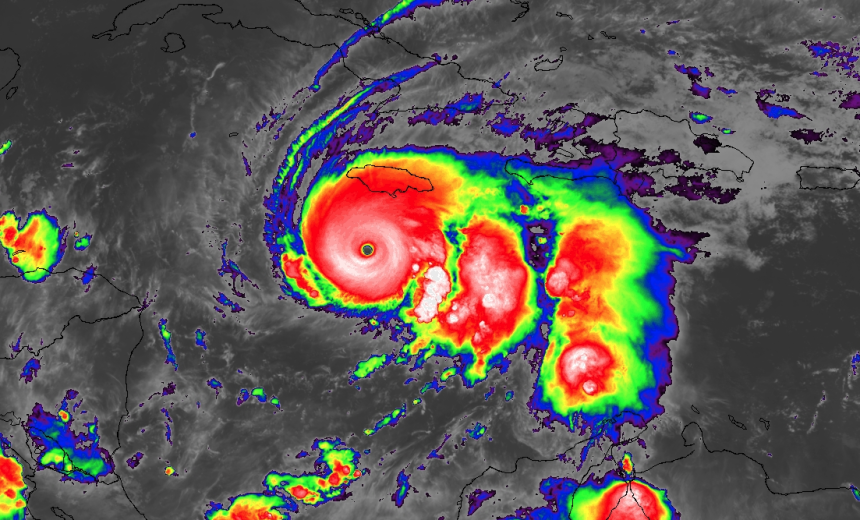
Hurricane Melissa delivered more than wind and water. It delivered a bill — a steep, unrelenting bill — that Jamaica will be paying for years, perhaps decades. If Part I established that Melissa was predictable, this second instalment confronts the scale of the fallout: the economic, infrastructural, agricultural, psychosocial, and governance costs that now define this moment in our national history.
The Agricultural Collapse
Preliminary assessment indicates that Melissa destroyed or severely damaged:
• Tens of thousands of acres of crops
• Poultry pens, piggeries, goat farms
• Irrigation systems whose replacement costs will run into billions
• Rural feeder roads essential to food movement
Agriculture is the backbone of Jamaica’s food security and a major contributor to employment outside the cities. Melissa hit that backbone with surgical cruelty.
Worse still, small farmers — who carry most of Jamaica’s domestic production — have few buffers. Many have lost seed stock, tools, fencing, livestock, storage sheds, and farm roads. These are losses that cannot be easily insured or quickly replaced.
Tourism: A Quiet Wound
The South Coast — our quieter, more locally embedded tourism region — took a heavy beating. Guest houses, fishing villages, craft shops, and eco-tourism enterprises suffered structural damage and prolonged power loss. Unlike the large North Coast hotels, many of these establishments operate with razor-thin margins. For them, Melissa’s damage is existential.
This is not simply a tourism problem. It is a foreign exchangeproblem.
The Informal Economy’s Invisible Pain
Fishers, barbers, rural shopkeepers, higglers, hairdressers, welders, taxi men, market ladies — thousands stand today in the ruins of their livelihoods. Their losses do not appear in spreadsheets, but they shape social stability.
Melissa quietly wiped out the income of large segments of the working poor.
Infrastructure: The Old Wounds Return
Collapsed roads, compromised bridges, unstable slopes, inadequately maintained drains — these are not Melissa’s creations. They are Melissa’s revelations. Engineers have written reports for years documenting:
• blocked natural drainage
• unregulated hillside development
• clogged culverts
• river training done without hydrological modelling
• buildings constructed in floodplains without adherence to codes
Successive governments acted selectively on advice, often favouring politically symbolic projects over structurally necessary ones.
Melissa has now handed Jamaica the bill for that pattern.
The Psychological Toll
Research from the University of Michigan, Japan, and The Philippines confirms that communities exposed to extreme weather suffer:
• anxiety
• trauma
• disruption of sleep
• loss of childhood security
• impaired decision-making during future hazards
Melissa has left Jamaica in such a state. The night the river rose in the St Mary South Eastern constituency , the “tornado” and Cat 5 winds moved in on St Elizabeth’s Black River the roofs peeled off in Westmoreland’s Russia — those moments have left memory wounds that will shape behaviour for decades.
Climate Justice and National Responsibility
Climate-intensified storms are not morally neutral. Jamaica contributes almost nothing to global emissions, yet bears a disproportionate share of the suffering. Melissa is part of a new climate injustice: countries that emitted the least pay the most.
We cannot merely be resilient. We must be strategic, scientific, and truthful.
Which brings us to the next question:
What kind of recovery will Jamaica choose?
Part III of this series outlines a professional-led, climate-ready national model that could protect future generations.