“The easiest way to propagandize people is to let a propaganda theme go in through an entertainment picture when people do not realize they are being propagandized.”
- Elmer Davis
While growing up as a child in the Caribbean my mind and my attitude concerning the United States, like those of countless millions of people around the world, were shaped by American propaganda.
They were influenced and they were molded, perhaps, more so by Hollywood movies, by American popular music, by books, by comics and other reading material, and by toys than through the news media sources like Voice of America, and then, much later on, by the cable news networks like CNN, MSNBC and Fox News via satellite technology. And though we tend to think of propaganda in nefarious terms, used in a nation’s or in a political entity’s attempts at spreading misinformation — putting a positive spin on what is patently negative and destructive — propaganda is not always deleterious or destructive in its intent.
For example, although it is patently flawed and indubitably misleading at times, this writer is of the opinion that American propaganda has done much to extoll the precepts and the virtues of the political ideology of liberal democracy. But what of American political propaganda as we had come to experience it before the advent of the current U.S. Federal Government administration, which, ostensibly, has a completely different idea of patriotism than that of Superman’s iconic motto of “Truth, Justice, and the American Way”, linking him to American ideals? Is it now a thing of the past or has it taken a completely different track?
With the gutting of Voice of America, and with the attacks on USAID and on USDA by the current U.S. Administration — entities which comprised a part of what is understood as “soft diplomacy”, used to win over the minds and the hearts of others in the world to our way of thinking without the use of bullets and bombs — what now is our new modus operandi and, equally so, what now is our message to the world? Are we still trying to make an argument in respect to American liberal democracy, or is our message now couched in a sort of white flag acquiescence where we are saying to the dictators and to the totalitarian regimes around the world that they were right all along about their way of living and that we now, collectively, as a people, are repentant of our once vaunted sense of humanity and justice, ready to zealously and wholeheartedly join their ranks and their causes after 300 years away from monarchical tyranny towards the wanton abuse and the unbridled exploitation of our citizens? What now sets us apart from such awful political systems and from the cultures of callous brutality on which they were built?
Both “good” and “bad” propaganda — which, at times, seek only to put a people’s “best foot forward” to others abroad, often hiding “inconvenient truths”, at the expense of being honest about scandalous skeletons which can be found in the closets of history — tend to operate on the tried and the proven practice of saying and doing things enough until myth, as in the hands of medieval alchemists, eventually, turn into reality, embraced by a gullible populace.
And, some might ask, “What is the fear of half-truths if their propagation leads mostly to positive results — that is, of the ends having justified the means?” This writer is no expert on the philosophical nor on the ethical challenges posed by “Situational Ethics” in such regards, but it seems to him that such positive mind-controlling agendas can become completely undone by destructive beliefs and habits which helped to shape and to sustain a nation which propaganda often chose to overlook. And it appears that that is now the case with the United States as has been the experience of other nations before it in the world, especially in those which view the idealism of liberal democracy as anathema.
Racism and misogyny are cases in point in terms of vices which our message to the world tends to omit. Despite cultural shifts which resulted in amendments to the U.S. Constitution, both as an acknowledgement of such vices and as attempts to address them in real terms on a national scale, too many open wounds were left by the reformers to be pronounced as healed by American progeny, as in the case of those who had presented themselves to the Jewish priests at the Temple in Jerusalem in ancient Israel as lepers touched by the hand of providence in order to confirm their miraculous healing from that medical condition. Sometimes the proverbial skeletons in the closet, those which were said to be non-existent, or to be dead and buried, appear to come back to life so as to bite nations in their proverbial posteriors.
This writer is willing to tolerate, although not recommend, the rationale behind political ideological propaganda, especially when it tends towards achieving some degree of good as in the case of the espousal of liberal democracy. But if we shoot for the sky using a shaky foundation then we may end up losing not only what we aspire for but also everything which we had already thought that we had achieved.
And with this in mind he reviewed some of the glorious propaganda creative pieces that were produced by Hollywood and broadcast worldwide, much to the ire of dictators and to totalitarian regimes on one hand, and much to the hope, to the courage and to the resilience of their peoples in terms of wanting and working towards throwing off such yokes of exploitation, oppression, humiliation and misery on the other.
What do we now do with All the President’s Men, the famous book about the Watergate scandal, written by investigative journalists Carl Bernstein and Bob Woodward, who broke the story for The Washington Post, detailing their efforts to uncover the truth behind the Nixon Administration’s involvement, which was made into a movie in 1976?
What do we now do with such soul stirring patriotic movies as the late Rob Reiner’s A Few Good Men, which came out in theatres in 1992, and The American President which came out in 1995? What of Tom Clancy’s The Hunt For Red October (1990); Patriot Games (1992); Clear and Present Danger (1994); and The Sum of all Fears (2002)?
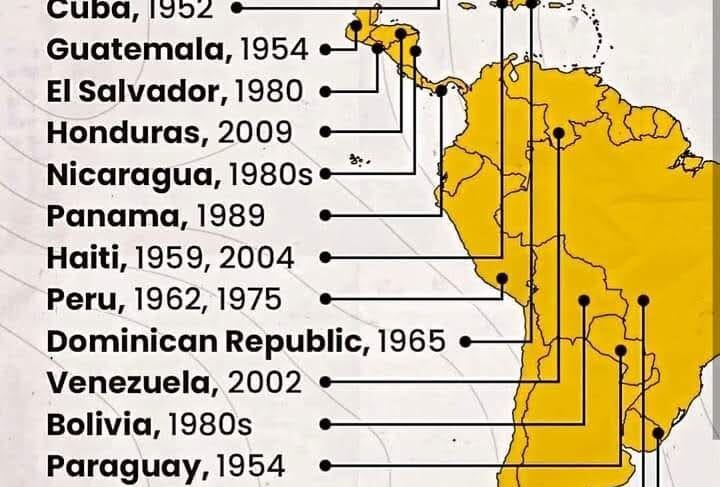
America, in all those films, even with some of them acknowledging U.S. national vices, still came across as “the good guys”. But exchanging love letters with a North Korean leader; but siding with Russia after an illegal and unprovoked military invasion; but actively supporting genocide in The Middle East, and by firing missiles at small, unarmed fishing boats in the Caribbean Sea all seem to be grossly antithetical to the ideas which inspired such films.
Do we continue to work to make our patriotic myths become reality in the hearts of the people of the world, or do we now chuck it all in and set everything ablaze? Have our lies and have our true selves finally caught up with and overtaken us? Perhaps Eric Hoffer was right when he said that: “Propaganda does not deceive people; it merely helps them to deceive themselves.”