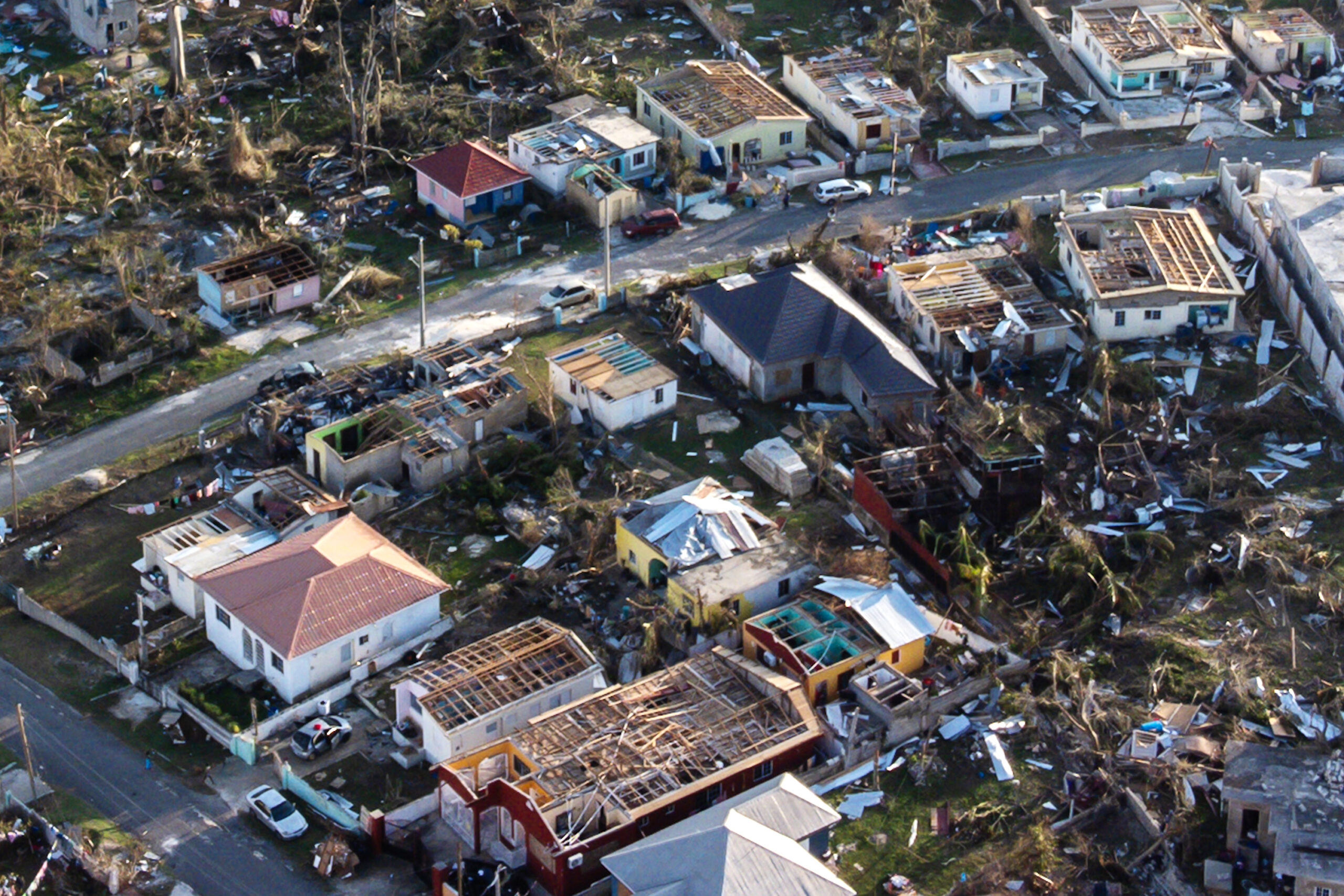
It has been 3 weeks since Hurricane Melissa made landfall, and the damage that has been assessed so far is beyond comprehension. All of Westmoreland looks as if a bomb has gone off, leaving destruction on an unimaginable level. Parts of Hanover, Trelawny, St James and St Ann are also very reminiscent of war zones and post-apocalyptic films. St Elizabeth’s capital of Black River is no more; it is destroyed, leaving nothing more than a memory of what it was before.
While the Government must be commended for their initial actions, it has become painfully obvious as the days have dragged into weeks that the response to this event has been lacking. People are, for example, still stranded in communities, cut off from access to the outside world. People are without electricity and running water, unable to easily access food, and have now resorted to looting for survival as well as drinking non-potable water.
It is obvious that the shelters, which were meant to temporarily house people during the passage of the storm, were not built for long-term occupation and that some accommodation is needed. It is obvious that education in the Western end of the island is going to take time to get back on its feet and that plans need to be put in place to move students across the country to ensure that they, the COVID generation, do not lose any more schooling.
While one can’t forgive the lack of preparation for the storm, excuses of “we’ve never had a Category 5 storm” don’t wash in an era where we have been repeatedly warned that the big one is on its way; one can understand it simply because we couldn’t imagine the scale of potential damage. What cannot be forgiven is the tardy response, which is slowly entering the shambolic and farcical territory.
In a time of national suffering, a time when we will be experiencing long-term pain and need to rebuild, instead of political unity, we have been greeted with partisan division and tribal politics. We have a Government which refuses to take seriously the questions and worries of accountability in how money and other donations are treated and instead insists on centralising all disaster relief efforts into the Office of the Prime Minister, making what should be a national, non-partisan effort a solely political one.
Not to be outdone, we have an Opposition which is intent on having it all its way or no way at all. After demanding a non-partisan body made up of political parties, civil society and the church to oversee the disaster relief efforts, the Government rebuffed them. In its stead, the Government proposed a parliamentary committee, to be chaired by the Government, to act as an oversight body for this matter.
Instead of accepting this in the interest of national unity while still demanding a non-partisan oversight committee akin to EPOC, the Opposition walked away, throwing their hands up in the air, saying this is not what they were demanding. No, it is not what you were demanding, but to walk away is to leave this issue solely in the hands of the Government when this is obviously a situation which calls for all hands on deck.
This partisanship has spread to the political talking heads, who now accuse each party of dropping off goods to their supporters and turning away others, and politicians only appearing in constituencies ruled by their parties. The leadership class and their running dogs are not using the opportunity to rebuild the broken trust between themselves and the Jamaican people, and are instead confirming their deeply held beliefs that, by and large, the politicians don’t really care about anything short of power.
The public has questions about how the donations are being accounted for and distributed. There is especially fear over how the monetary donations, especially to the GOJ, will be handled, along with the reconstruction effort, which will be massive. These are well-founded fears; we are a corrupt country with a corrupt ruling class, at least that is the perception people have, and what the data have shown. To not allay these fears is arrogant and will play no small part in the general retreat from liberal democracy activities which people have been doing.
This refusal to allay justified fears has left the door open for NGOs, specifically foreign-backed ones, to act as the trusted face of relief efforts. This is dangerous on so many levels as it further removes the State from the life of the people, making it useless in their eyes, and reducing participation in it. But it is also dangerous because, at the end of the day, no matter how benevolent these groups are, they are accountable to no one save their board.
We have no say in how they act, but we at least theoretically have the power to hold the Government and Opposition to account for actions they take, even in this broken system.
It can’t be that these NGOs, some of which have either a shady track record or no track record at all, are left to dominate and dictate our disaster relief efforts because our politicians are too busy engaging in cass-cass to actually lead.
An agency such as ODPEM should be a stand-alone agency, independent and answerable to Parliament. It should not be housed in the OPM or any other ministry to die of underfunding or political shenanigans. Disaster relief funds should go from the central government to the municipal authorities; they are the most on the ground representatives and know intimately what the damage is, who needs assistance, and where to direct it. The fact that municipal authorities controlled by the JLP are openly complaining about the sidelining they are facing when they are the first ones being asked about what is being done shows the failures of how we are tackling this.
We don’t have a lot of time to get things right. People are without basic needs, they are without real meaningful representation, as councillors have been sidelined, and it is only a matter of time before parts of society break down. If, for example, a real solution is not found for the housing crisis, which is now exacerbated because of this hurricane, the issue of squatting and the eventual violence which accompanies it as gangs take part, will blossom. If, for example, a solution is not found to the looming education crisis we are facing in the western belt, then we run the risk of condemning a whole generation to stagnation and backwardness when compared to their peers in this rapidly changing world.
Press conferences are nice, but oversight would be better. Not expecting to be hit by a Category 5 hurricane is understandable, but the failure to utilise the existing tools to properly tackle the aftermath is not excusable. Wanting to get things done in a timely manner with as little red tape is understandable; a refusal to partake in honest oversight is unforgivable. Every disaster is an opportunity; we run the real risk of squandering this opportunity, an opportunity to show the strength of the State to take on these challenges with the buy-in, support and participation of the populace. We are barely treading water at the moment and look to be in real danger of missing the mark completely.