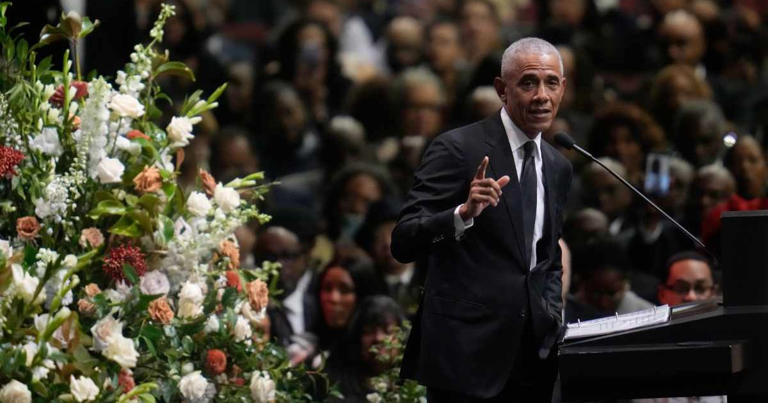
Former United States President Barack Obama’s speech at Reverend Jesse Jackson’s funeral, March 6, 2026, began with a Bible quote from Isaiah, “Here I am, Lord, Send me.” A message that Isaiah used to guide a “hardened and resistant people”.
President Obama continued to remind us that Reverend Jackson was a person who became a leader over and over again “when the poor and the dispossessed needed a champion and a country needed healing”. He stood in the face of hatred and opposition and said, “Here I am. Send me.” He put aside personal gain for the betterment of the world. President Obama said “He invited us to believe in our own power to change America for the better.”
January 1, 2021, Bob Harnish and Al Wakefield both of Mendon, joined forces to introduce a Declaration of Inclusion to all 247 cities and towns in the state of Vermont. The declaration encourages the communities to engage in welcoming and practical activities so that all citizens feel safe from prejudice and discrimination in order that they may thrive and their communities flourish.
As of today 165 of the cities and towns have adopted the statement representing 80% of the total population of the state of Vermont. This is an impressive accomplishment. Efforts today continue to expand implementation and to encourage members of communities across Vermont to stand up and effect changes that would promote unity and justice.
Another effort led by Dr. Jude Smith Rachele, CEO of Abundant Sun — an international organization dedicated to welcoming and uniting the diversity of the world — maintains a base of operations in Vermont and shows us a way forward. I recently participated in a Zoom broadcast of a podcast called Discourse beyond Division. The event was hosted by Abundant Sun on its educational platform JuJuBee, a space described as one “you can rely on for calm, clarity, civility and stability”.
In the podcast, Dr. Rachele, Rodney Patterson and Peter Trevor Wilson shared the paths they have taken, and how they are stepping up to create unity and improve our collective well-being. The discussion emphasized the importance of creating conditions where people are seen, heard, respected and engaged. Such conditions arise when leaders champion community cohesion and justice over all else.
Members of the Bahá’í faith participate in community efforts to promote unity. One of the foundations of the effort is the practice of consultation, a process that avoids top-down, authoritarian leadership. Participants strive to set aside personal agendas and search together for solutions that serve the good of the whole rather than the interests of any particular group. Patience and building trust are essential, and both require time to develop.
At the core is an understanding that we are all part of one human family. What happens in one country or continent ultimately affects everyone.
Dr. Rachele and her colleagues speak of the power of “human equity”, which focuses on the unique and intangible assets each individual brings to the community. Human equity recognizes that no two people are the same, and that all people are interconnected. It moves beyond discussions of group identity, while still acknowledging and addressing collective pain and suffering.
Each of us is vital. Humanity can be imagined as an “8-billion-piece puzzle” in which every piece is needed for human survival. We depend on shared resources — biodiversity, economic systems, social interaction, health care, and the basic necessities of life. All of these must be considered in efforts to unite the peoples of the world in peace.
Values that prioritize human well-being and fulfillment of human potential must guide decisions, especially in a world drawn toward the seductiveness of immediate gratification. Reflection, consultation and investigation of truth are essential practices.
Consider a single challenge such as addressing the needs of the unhoused. How might solutions effect the environment, the economy and the social fabric of a community? Measuring the pulse of a community through meaningful metrics can help us understand how people’s needs are interconnected and guide effective decision-making and public policy.
Bringing the peoples of the world together in unity is an awesome task. It will not be accomplished by those who remain on the sidelines. We must hear the words of Isaiah and respond, “Here I am. Send me”. We can become part of a force that works to make the world a safe, welcoming and engaging place — one where human dignity and potential stand at the forefront of our actions”.
Today we need the kind of leadership that will guide us toward peace. Reflecting on the realities of our communities, listening to diverse perspectives, and consulting on actions for the good of all are essential steps. Action, reflection, consultation and continued investigation must become part of every decision. Patience and dedication to the process will be required. Think of this as a journey, not a destination.