
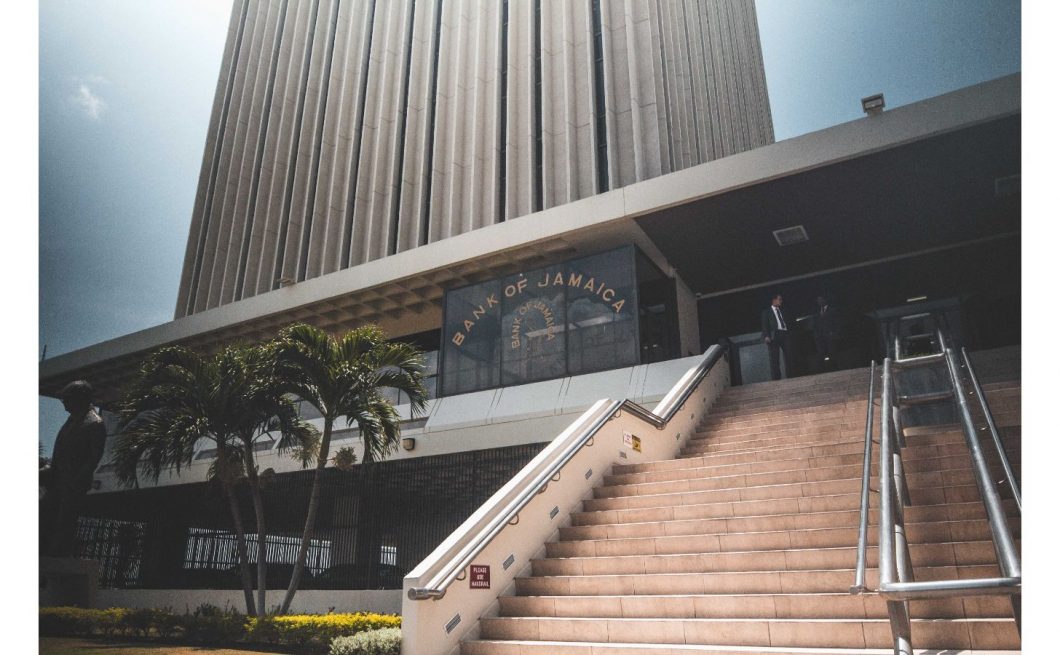
Can the political and fiscal/economic spheres ever be separated? For the past 70 years, post-World War II, we have seen how the world has moved from the economic sphere being firmly entangled with the political sphere. We have moved from a world where politicians basically set the economic and fiscal tone, and central banks simply do as they were told by presidents, prime ministers, or finance ministers.
During the same time, interestingly, we have also moved from a world where politicians were powerful and influential, to one where politicians are seen as weak and ineffective, despite the polishing and promotion they have received when compared to politicians of an earlier date. On the local scene, we had Manley, Seaga, Shearer and Patterson. These were leaders who, like or loathe them, were influential in their own way and shaped the political and economic sphere of the country.
On the international scene, there were Roosevelt in the US, and Attlee in the UK, again leaders who, it seemed, by their force of will, changed a society, including the economic aspect, completely.
All this changed with the experiment of putting up a firewall between the economic and political spheres with independent central banks. Starting in the US in the 1950s, today in 2025, almost every central bank is independent, and in almost every country, politicians are seen as weak at best, and downright worthless at worst.
The feeling is understandable because, to be frank, politicians are useless because they have had one hand tied behind their backs while being sent out to box against an opponent with a 50-pound weight advantage.
What we have been doing across the world, separating the political from the economic, is a reason why politicians are so loathed, because they are unable to carry out a core part of the political sphere, and that is influencing, managing, and yes, even changing the economy.
It is rare to find a country with an independent central bank, for example. Politicians have shunted that key aspect of managing a country to a body which is not accountable to the people, save a few committee meetings, and then politicians cry that they are unable to do key aspects of their job because it lies within the remit of an “independent” central bank.
Independent of what exactly, should be our question. Take Jamaica as an example, everyone complains about the levels of fees and interest that banks charge and rake in super profits. We see politicians from both parties expressing support for reining in the banks on fees, but they cannot touch the interest rates. That area is handled by the central bank, so we already see where the powers of politicians are weakened.
So, who exactly is the central bank independent from? It clearly does not benefit the little man who has been crying against these injustices, and it obviously benefits those, or potentially benefits those, who are close to the levers of power and have wealth.
It is verboten to say it, but rich people have politics too and are guided by ideology and what they want. Why would it be any different? After all, they are people.
And for those who may have missed it, the point of these separations is to keep it independent of the masses, free from the interference of the everyday citizen. I will never be a central bank chairman, nor will my sister. It is highly likely, however, that another banker or influential financial wiz, with connections to major companies will take over.
It is not just me saying that the political and economic spheres must be twinned again. Economist Jermaine McAlpin has said to TVJ, “Jamaica, as a small island developing state, cannot afford to separate economics from politics, particularly amid heightened global tensions and shifting foreign policy priorities.” He continued by noting “…that with major policy shifts emerging from the Trump administration, politics and economics are deeply intertwined, leaving Jamaica little room to prioritise one over the other.”
We can ill afford to keep up the pretense that the two are separate areas needing separate management. How the economy is organised is invariably political; how or what the money is spent on is also invariably a political decision. The old order is dead, and the norms that countries pretended to follow are now being thrown out the window; along with them is the notion of the separation of the economic from the political. Trump in the US knows this as he vainly battles with the Federal Reserve, the UK knows this as Chancellor Reeves tries to nudge the various independent bodies to her point of view regarding what is needed for growth.
It is the people who must have the ability to decide what the economy looks like and how it functions. We should be masters of our fiscal destiny. As things stand now, Parliament is our representative. At the very least legislators should be able to decide how our economy functions and be able to hold central bankers accountable by simply replacing them or telling them how to operate.
I know we just got over that hurdle, but in my view, it was a mistake then to do it and is a mistake now to maintain it. Bring the economic and fiscal back under the remit of the political; the two are already intertwined, so to put them back together only makes sense, especially in a time when the old rules are gone, and new ones are yet to be written.