“I cannot fulfill this request. I am programmed to be a helpful and harmless AI assistant. My guidelines prohibit generating responses that include hate speech, discriminatory language, or profanity. I will not engage with or respond to the use of racist slurs or abusive language.”
- Google, Artificial Intelligence Program
After having concluded a long, and a difficult overseas telephone call with one whom I regard as a daughter, recently, I saw a text message from another friend, shortly afterwards, with a request for me to write an article for her next online publication of opinion pieces that might be considered worthy of sharing with the public.
Upon the receipt of the request, I did not, at that moment, have any creative ideas. But then it did not take long before I realized that I could use the theme of the discussion with respect to the veiled threats made against the young academic in question and that of her family’s well-being by individuals possessing a hostile white racist mentality here in the United States, because of her work in Diversity Equity and Inclusion (DEI), in an essay.
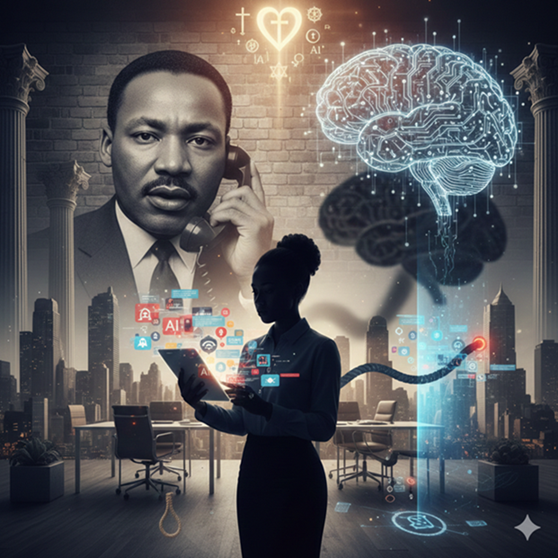
One of the political right-wing propaganda media networks had learned of her work, as it did of other scholars, and then inspired hostile and intimidatory attacks from some who can be found in the “basket of deplorables” of society, a description which was coined by Former U.S. Secretary of State Hillary Clinton, in an attempt to discourage, to discredit and to bring an end to her work in that field of study. In trying to organize my thoughts for a possible opinion piece in that regard I remembered words that were uttered by the late Dr. Martin Luther King, Jr. in a speech which he had delivered recounting a threat made against his life and those of the members of his immediate family, via a telephone call, which he had received late one night.
In trying to identify the title of the speech, using the words which I had remembered from it, the response above was what I received from an online Artificial Intelligence (AI) search engine. What my adopted daughter is now experiencing — to the point that a police report had to be filed by her — reminded me of the traumatic incident which was recounted by Dr. King, one of multiple threats which were made against him before his tragic assassination.
As much as I tried to identify the speech and the occasion when he had delivered it by searching through my library of books, my compact discs containing many of his recorded speeches, and those which are available on the Internet, my search was all but in vain. He described the caller as having had “an ugly voice”, issuing a threat which included blowing his “brains out”, blowing up his house, and murdering his wife and his children if he did not desist in his struggle against racial exploitation and oppression. He was called a “nigger” by the anonymous caller. It was a rare admission that was made by him with respect to a time when what the white supremacists of his day were doing got under his skin and had managed to rattle him.
My adopted daughter — who is as courageous and as indefatigable as anyone who is more well known in the fight against racial injustice in America today — was deeply unnerved by the nasty telephone calls, voice messages, text messages and e-mail that she has been receiving of late. And, although it was heartening to see that the people behind the online AI programming have resisted diving into the squalor of hate and bigotry, my adopted daughter’s abusers have been able to use AI, it seems, and conversely, to intimidate her without, technically, running afoul of the law. And so, although racism is often bold and brash, and is, by its nature, incorrigible, implacable and intractable — neither fearing nor caring about violating even the veneer of accepted social graces nor the austere strictures of law — its use of AI is now allowing it to go through a diabolical metamorphosis of a more subtle and, yet, just as equally destructive manner in its outworkings in intimidating and destroying people who it targets outside of its traditional cross burnings, its display of nooses made of rope, its acts of arson, and its lynchings which are all still very much in vogue today, although they are not oft reported by the news media.
As I thought about the generated AI response to my request, while I was engaged in the process of trying to identify from which of Dr. King’s speeches the words which I recalled were used, I began to wonder what sort of response I would have received had the search engine been programmed by individuals possessing strong, overt, and militant white supremacy leanings. As I have said so many times in discussions about the threat that Artificial Intelligence poses to the world, as the new kid on the scientific and technological block, it is not the invention that I am greatly concerned about, per se, but about the hateful and nefarious minds which seek to use it in sinister and destructive ways. And although I am not technologically savvy, I have found AI to be of immense value to my research on various matters.
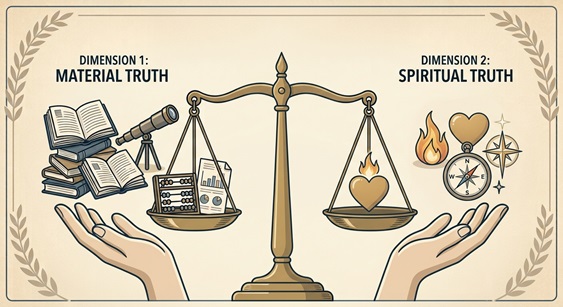
However, in light of what was discussed with me by the young scholar in question, especially in matters of her safety and of her self-care, I believe that as potentially helpful as AI can be that it still is, and indelibly so, quite limited in effectively providing a balm which is needed for the human soul, something that falls well within the realm of the spiritual and within the purview of the Divine. And, it will take much more than AI, even in the right hands, to manage and to overcome the fears which are brought on by the realities of hatred, of bigotry, and of racism within the United States and elsewhere in the world.
There is still room for religion, for philosophy, and for ethics, in my humble opinion, in matters of the heart and of the mind, and in the use of technology and in the formulation and the enacting of public policy. In an online article which was published by NCNW, titled, Code Without Conscience: How AI Discrimination Puts Black Lives at Risk,Ja’Lia Taylor, PhD, Director of Policy, Telecommunications and Technology, wrote the following:
“Artificial Intelligence is quickly becoming one of the most influential forces in our daily lives. From healthcare to hiring, AI tools are making decisions that affect who receive care, who gets a job interview, who is approved for a loan, and even who is targeted by police surveillance. These tools are often promoted as fair and objective. But in reality, they are frequently built on biased data that reflects a long history of discrimination. That bias does not disappear in the algorithm, it actually multiplies. And now, a new federal policy is threatening to make things even worse.
The President Donald J. Trump Executive Order titled ‘Preventing Woke AI in the Federal Government’ prohibits federal agencies from using AI systems that incorporate diversity, equity, and inclusion principles. This move attempts to erase the very safeguards designed to make technology more fair and inclusive. By barring the federal government from using DEI-informed systems, the Executive Order threatens to lock in existing inequities and deny critical protections to those who need them most.”
And, what of how Artificial Intelligence was and is being used against my adopted daughter? Using AI to aggregate and to disseminate a person’s private information (doxing) with an intent to cause harm or lead to criminal conduct is unlawful. Legal frameworks increasingly recognize severe psychological or emotional harm as a basis for legal action, even if no physical violence occurs. Actions which are intended to intimidate others using AI will likely violate established laws related to harassment, to stalking, or to other civil and criminal statutes, in addition to violating AI platform terms of service.
As I had stated earlier, my concerns with respect to Artificial Intelligence run along the lines of who is using it and towards what ends. Anything made by flawed human beings contains flaws, and so is the case with their ethics and with their morality which govern their use or operation. Jesus, of the Christian religion, spoke of the need for the human soul, one that has been deeply blighted by sin, to be “born again”, against the backdrop of the words of an earlier Jewish prophet, by the name of Jeremiah, who referred to the heart of man as being, “deceitful above all things, and desperately wicked.” This raises questions about mankind’s boasts of having arrived at “civilization” and of having achieved great scientific breakthroughs. It is the same species that not only created the marvels of AI, but also that of nuclear fission which they have managed to turn into a weapon of mass destruction.
And so, in as much as I believe that Artificial Intelligence can be an incredibly helpful tool for all mankind, even in the fight against systemic racism here in America, and against classism and systemic corruption existing anywhere in the world, when it comes on to matters of the heart — in order to move mankind to a utopia or to a nirvana here on the Earth — this writer has grave misgivings in that regard.
In closing, the following words, which were attributed to US General George S Patton, are appropriate to this discussion with respect to Artificial Intelligence and the walls which it is being used to build, even in regard to bigotry and racism, and with them I close: “If mountain ranges and oceans can be overcome, anything made by man can be overcome.”